A prescription label tells you who the medication is for, what medication was dispensed, how it was prescribed to be used, and other important information about the prescription.
Prescription labels can look different from one pharmacy to another, but learning where to find the key information can make them easier to understand. If anything on your label is unclear, unexpected, or different from what you were told, ask your pharmacist before using the medication.
Key Takeaways
- Check the patient name, medication name, and strength to make sure they are what you expect.
- Read the directions for use carefully, even if you have taken the medication before.
- The Rx number is an identifying number assigned to the prescription.
- If something on the label—or the medication itself—looks unfamiliar or unexpected, ask your pharmacist rather than guessing.
What Is a Prescription Medication Label?
A prescription medication label is the label placed on a medication container or package by the dispensing pharmacy.
It provides important information about the patient, medication, directions for use, prescription, prescriber, and dispensing pharmacy.
The pharmacy label is different from other medication information you may receive, such as an FDA-approved Medication Guide, Instructions for Use, or other patient information.
How to Read Your Prescription Label
Although the exact design can vary, here are some of the most important parts of a prescription label to recognize.
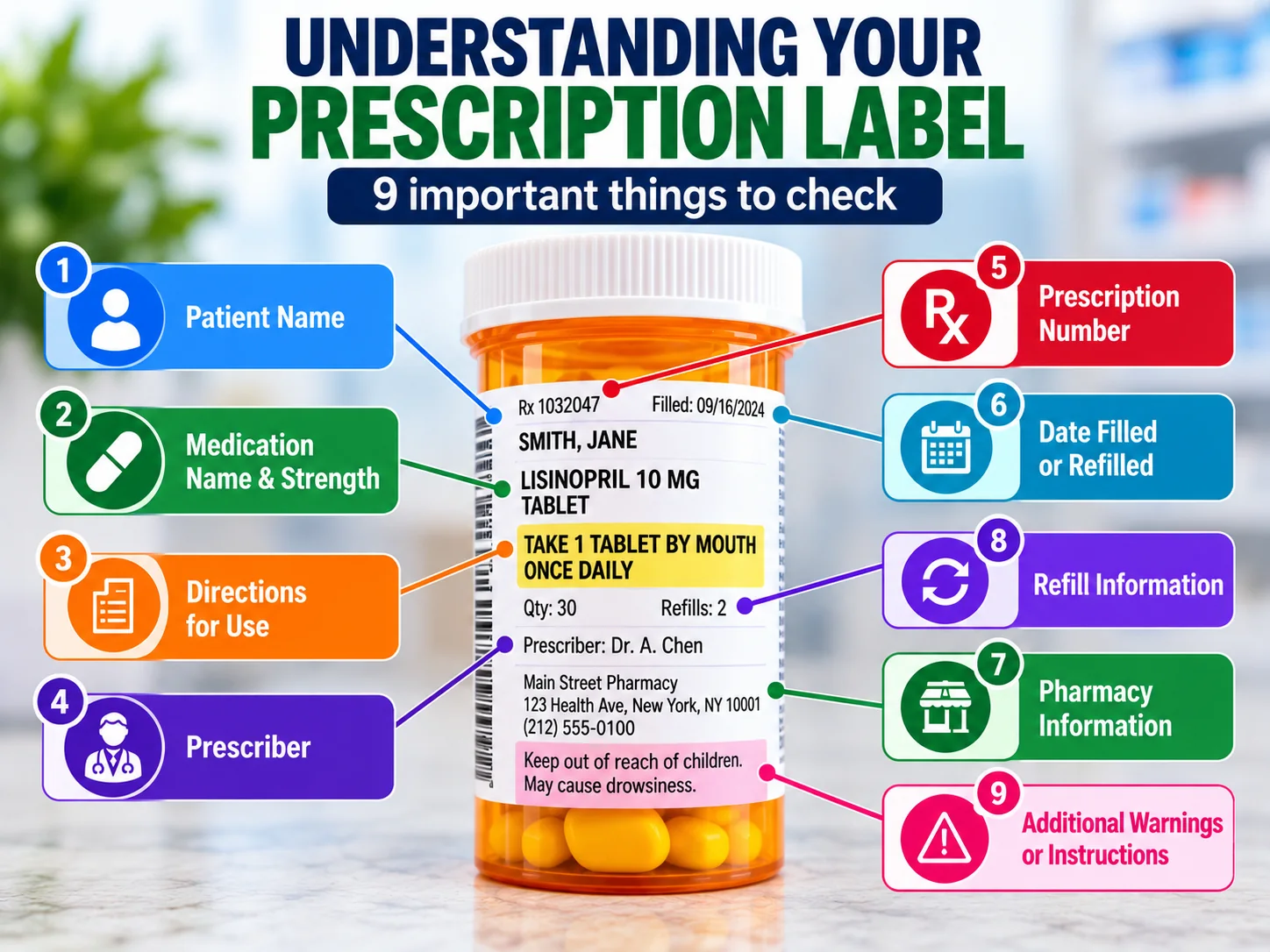
1. Patient Name
First, check that the prescription is labeled for the correct person.
This is particularly important when prescriptions for several members of a household are picked up at the same time.
2. Medication Name and Strength
Look for the name of the medication and its strength.
Strength describes the amount or concentration of medication in a particular dosage unit or formulation, as applicable.
Don't rely only on the color, shape, or appearance of a tablet or capsule to identify it. If the medication name or strength is not what you expected, ask the pharmacist before taking it.
3. Directions for Use
The directions tell you how the medication was prescribed to be used.
Read them carefully every time you receive a prescription or refill. Don't assume the directions are unchanged simply because you've taken the medication before.
If you don't understand the directions, don't guess. Ask your pharmacist or prescriber to explain them.
In New York, directions for use are one of the critical elements of a prescription label.
4. Rx Number or Prescription Number
The Rx number, also called the prescription number, identifies the prescription.
It may appear with wording such as Rx or Rx #, depending on the pharmacy's label design.
5. Prescriber
The label identifies the healthcare professional who prescribed the medication.
If the prescriber listed is not who you expected, ask the pharmacy about it.
6. Date Filled or Refilled
The label includes the date the prescription was filled or refilled.
The fill date should not automatically be interpreted as the medication's expiration date . They are different concepts.
7. Pharmacy Information
The label identifies the pharmacy that dispensed the prescription and provides contact information.
In New York, the patient-centered label elements include the pharmacy's name, address, and telephone number.
This gives you a direct way to contact the pharmacy if you have questions about the prescription.
8. Refill Information
Your label may show refill information, such as whether additional refills are available or how many remain.
The wording and location can vary from one pharmacy label to another.
9. Additional Warnings or Instructions
Some prescriptions include additional warning or auxiliary labels with instructions or precautions specific to the medication.
These may address topics such as food, drowsiness, storage, or other precautions.
Read the actual printed instruction rather than relying on the color or appearance of the sticker. If you don't understand a warning or instruction, ask your pharmacist.
What Is the Rx Number on a Prescription Bottle?
The Rx number is an identifying number assigned to a particular prescription.
It helps the pharmacy identify which prescription you're referring to when you request a refill or have a question.
This can be especially useful when you have several prescriptions or more than one prescription involving the same medication.
The Rx number identifies the prescription record—it is not the medication name, strength, or directions for use.
What Does “Refills Remaining” Mean?
When refill information appears on your prescription label, it generally tells you whether additional fills have been authorized under that prescription.
A label may indicate that one or more refills remain or that there are no refills remaining.
If you expect to continue the medication but no refills remain, contact your pharmacy. Your pharmacist can explain what the next step is for that prescription.
What Should You Check When You Pick Up a Prescription?
Before using a newly filled or refilled prescription, take a moment to check the label.
Before You Leave the Pharmacy
- Check your name.
- Check the medication name and strength.
- Read the directions.
- Make sure you understand how the medication was prescribed to be used.
- Ask about anything unfamiliar or unexpected.
FDA recommends checking that you received the expected medication, making sure you understand how to use it, and asking your pharmacist about unexpected differences or anything you don't understand.
What If Your Medication Looks Different?
Sometimes a medication may look different from a previous refill. For example, a tablet or capsule may have a different color, shape, size, or markings.
There can be legitimate reasons for an appearance change, including a different manufacturer or product being dispensed. But don't assume an unexpected difference is harmless.
Check the medication name and strength on the label and ask your pharmacist to verify the medication if its appearance is different from what you expected.
FDA advises patients to ask their pharmacist when a medicine looks different from what they previously received.
Internal link placeholder — activate after the related article is published.
If Anything Is Unclear
A prescription label is meant to communicate important information—not leave you guessing.
If the medication name, strength, directions, refill information, warnings, or appearance aren't what you expected, ask your pharmacist before using the medication.
Your pharmacist can help you understand what is written on the label and answer questions about your specific prescription.
If you're managing several ongoing prescriptions, learn how our medication packaging and management services can help make your medication routine more organized.
Watch: How to Read a Prescription Label
Prefer to watch? This short Preferred Pharmacy Education video reviews the important information to look for on your prescription label.
Sources & References
This article was developed using current guidance and information from authoritative government and health sources.
- New York State Education Department, Office of the Professions — Part 63: Pharmacy New York requirements for patient-centered prescription drug label elements and pharmacist counseling.
- U.S. Food & Drug Administration — Stop, Learn, Go: Tips for Talking With Your Pharmacist to Learn How to Use Medicines Safely FDA patient guidance on checking prescriptions, understanding how medicines should be used, and asking about unexpected differences.
- MedlinePlus — Medicine Safety: Filling Your Prescription Patient guidance on checking prescription information and verifying medicines that look different or unfamiliar.
- U.S. Food & Drug Administration — Learn About Your Medicines FDA information about Medication Guides, Patient Package Inserts, Instructions for Use, and other patient medication information.
This article is for educational purposes only and does not constitute medical advice. Always consult your physician or a licensed pharmacist regarding your specific medications, label instructions, and health conditions.