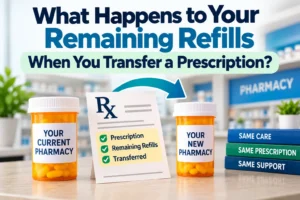
Your prescription coverage may continue when you switch pharmacies, but do not assume your cost will stay the same. Your health plan may have a pharmacy network, and some plans charge different amounts at different pharmacies within that network. Before requesting a transfer, check whether the new pharmacy participates in your specific plan and ask what you can expect to pay for your medication. [1, 2]
Transferring a prescription and getting an insurance claim covered are separate questions. A prescription may be eligible for transfer while the plan applies its own coverage, pharmacy, and cost-sharing rules. [1–3]
Why might my price change at a different pharmacy?
Your plan may distinguish between pharmacies in its network and those outside it. For Medicare drug plans, using an out-of-network pharmacy can cost more, and some plans only cover prescriptions filled at in-network pharmacies. Some Medicare plans also designate preferred in-network pharmacies, which may have lower copayments or coinsurance than other pharmacies in the plan's network. [1]
The word preferred here describes an insurance plan's network designation. It does not mean that a pharmacy named Preferred Pharmacy is automatically preferred by your plan. Check your particular plan and the exact pharmacy location.
Other details of your benefit can affect the price you are quoted, including whether your plan covers the medication and which cost-sharing rules apply. A pharmacy transfer by itself does not establish what your next fill will cost. [1, 2, 4]
What should I check before requesting a transfer?
- Check the pharmacy's status in your plan. Use your insurer's current pharmacy directory or call the member-services number on your insurance card. Ask about the specific pharmacy location, since network participation depends on your plan. [1, 2]
- Check the prescription's coverage. If you are unsure whether your medication is covered, review your plan's drug list or ask the insurer. HealthCare.gov recommends checking the insurer's materials or calling the plan with your plan information available. [2]
- Ask about the expected cost of the next fill. Tell the new pharmacy which plan you use and ask it to help check your benefit and likely out-of-pocket amount. Confirm the amount when the prescription is processed; a preliminary quote may differ from the final claim.
- Check the timing if you need medication soon. Ask when the transfer can be completed and when the prescription could be filled. If you are close to running out, tell your pharmacist or prescriber promptly rather than changing how you take your medication on your own.
For example: A patient with a Medicare drug plan may find that both pharmacies are in the plan's network, but one is designated a preferred in-network pharmacy. Their out-of-pocket price may differ even though the prescribed medication has not changed. The plan can confirm its current network and cost-sharing details. [1]
Does insurance coverage transfer with the prescription?
The prescription information is transferred between pharmacies under the applicable rules; your insurance benefits are determined by your plan. The new pharmacy generally needs your current insurance information to check and process a claim. If a claim does not go through as expected, ask the pharmacist what the plan's response says and contact the insurer for an explanation of your benefits. [1–3]
For non-controlled prescriptions in New York, the patient or authorized representative can request a transfer to another pharmacy, including any remaining authorized refills. Other types of prescriptions can have different requirements. This article focuses on the insurance questions to check when switching pharmacies; a pharmacist can assess whether an individual prescription can be transferred. [3]
What if the new pharmacy is outside my plan's network?
Ask your insurer whether it covers fills at that pharmacy and what you would pay. Medicare notes that out-of-network fills usually cost more and may require the patient to pay the full amount, depending on the plan and circumstances. The insurer can explain its own rules. [1]
If coverage or cost is a problem, ask the plan which nearby pharmacies participate and whether another option is available for your prescription. A pharmacist may help you understand a rejected claim, but the insurance plan determines your benefits.
Preferred Pharmacy's prescription transfer service page covers the general transfer process. Before choosing any new pharmacy, checking its status under your own insurance plan can help you avoid an unexpected cost.
Watch: Will Insurance Cover Your Prescription at a New Pharmacy?
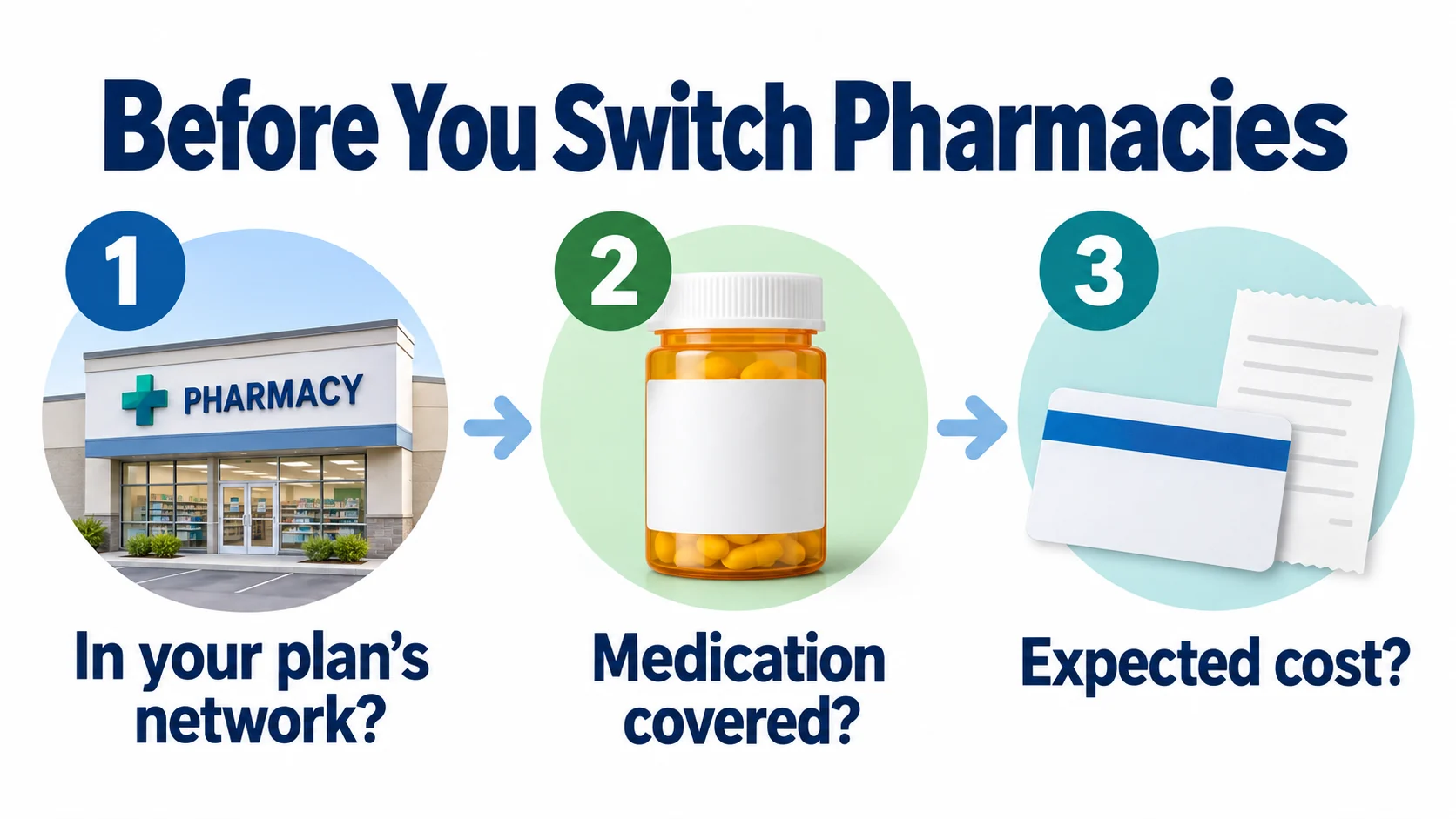
Learn three things to check before switching pharmacies: network status, medication coverage, and expected cost.
Frequently Asked Questions
Will my copay stay the same if I change pharmacies?
Not necessarily. Your plan may have different cost-sharing arrangements with pharmacies in its network, including preferred in-network pharmacies. Ask your insurer about the specific pharmacy and prescription before you transfer. [1]
Is an in-network pharmacy always the cheapest choice under my plan?
Do not assume so. Some Medicare plans have preferred in-network pharmacies with lower out-of-pocket costs than other in-network pharmacies. Check your own plan's current terms and the expected cost of the prescription. [1]
Can I transfer a prescription even if the new pharmacy is out of network?
Transfer eligibility and insurance coverage are different questions. A pharmacist can check whether the prescription can be transferred; your insurer can tell you whether it covers a fill at that pharmacy and how much you may have to pay. [1–3]
Who should I contact if the quoted price is higher than expected?
Ask the pharmacist whether your current insurance information was used and what response came back when the claim was processed. Contact your insurer to confirm the pharmacy's network status, the medication's coverage, and your cost-sharing rules. [1, 2]
Sources & References
Authoritative sources used to check this article’s insurance and prescription-transfer information.
- Medicare: What pharmacies can I use? Explains network, preferred in-network, and out-of-network pharmacies under Medicare drug plans.
- HealthCare.gov: Getting prescription medications Explains how to check medication coverage and whether a pharmacy participates in a Marketplace plan.
- New York State Education Department: Transfer of Prescriptions Explains New York's prescription-transfer rules and distinguishes controlled prescriptions.
- Medicare: How do drug plans work? Explains formularies and plan-specific drug coverage rules.