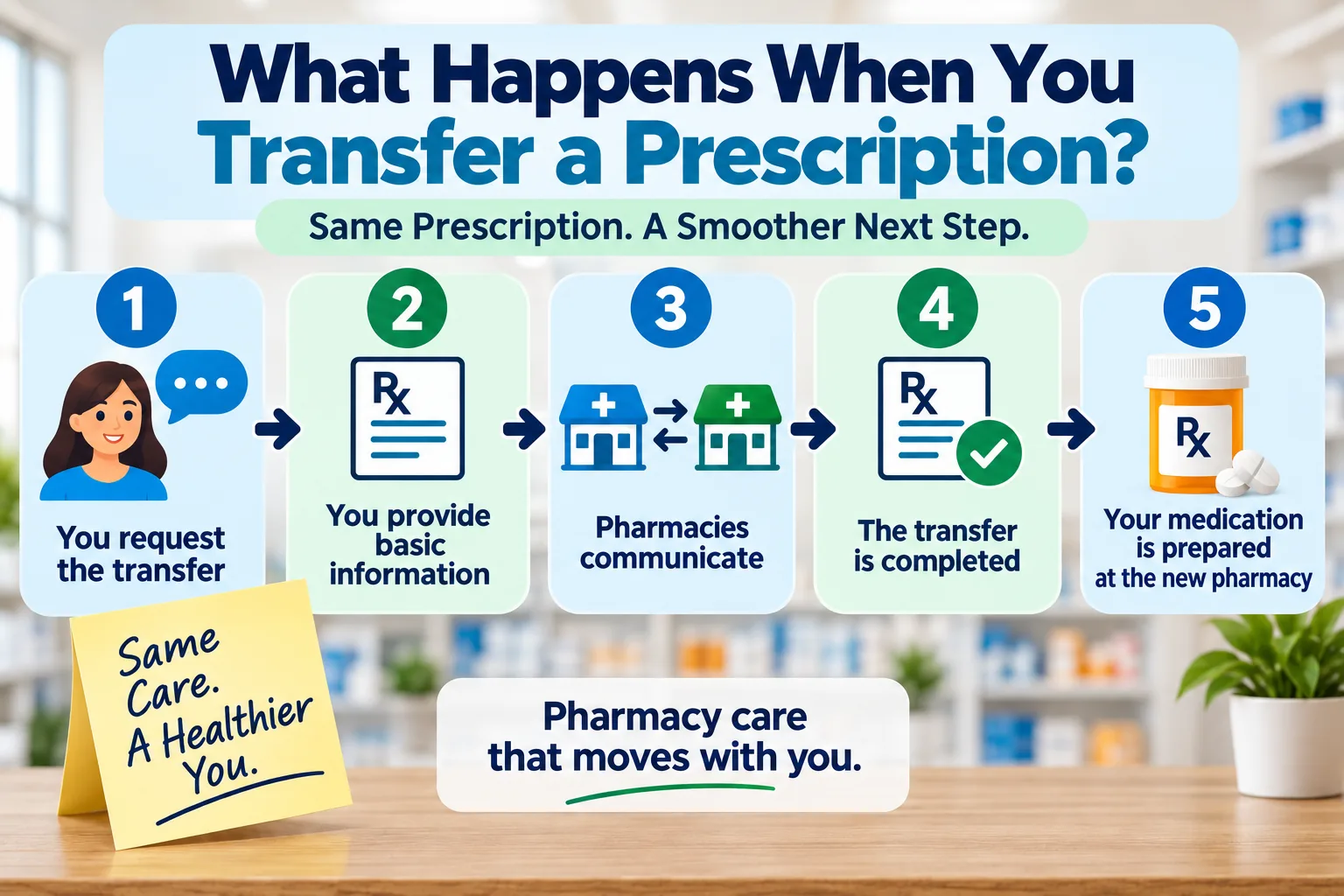
When you transfer a prescription to another pharmacy, you are asking the new pharmacy to receive the prescription information from your current pharmacy so the prescription can be filled there. In New York, prescription transfers are handled between authorized pharmacy professionals and require the patient's or authorized representative's request and approval. For non-controlled prescriptions, the original prescription is invalidated at the transferring pharmacy once the transfer is completed, and the receiving pharmacy maintains the transferred prescription record.
The exact process can vary depending on the prescription and circumstances, and controlled-substance prescriptions are subject to additional requirements.
Key Takeaways
- You generally start by asking the pharmacy you want to use to transfer the prescription.
- The new pharmacy typically needs information about your prescription and the pharmacy currently holding it.
- Pharmacy professionals communicate the prescription information and document the transfer.
- In New York, non-controlled prescriptions are transferred in full, including remaining authorized refills.
- A transfer does not necessarily mean the medication will immediately be ready for pickup.
- Some prescriptions, including controlled substances, are subject to additional requirements.
What Does It Mean to Transfer a Prescription?
A prescription transfer moves an existing prescription from one pharmacy to another.
This is different from asking your prescriber to issue a completely new prescription to a different pharmacy. When an eligible existing prescription is transferred, pharmacy professionals communicate the prescription information needed for the receiving pharmacy to maintain the transferred prescription record.
In New York, a patient or an authorized representative must expressly request and approve the transfer. For non-controlled prescriptions, transfer information may be communicated orally, in writing, or electronically between the authorized pharmacy professionals.
This can be useful when you change pharmacies, move to another area, need to use a different pharmacy, or simply prefer to have an eligible prescription filled somewhere else.
What Information Do You Usually Need to Provide?
When requesting a transfer, having information from your current prescription bottle or label available can make it easier to identify the prescription and the pharmacy that currently has it. If you're unsure where to find information such as the prescription number or refill information, see our guide to How to Read a Prescription Label .
A pharmacy may ask for information such as:
- your identifying and contact information;
- the name and strength of the medication;
- your prescription number, if available;
- the name of your current pharmacy; and
- the current pharmacy's phone number.
The exact information requested can vary by pharmacy and situation.
What Does the New Pharmacy Do After You Request the Transfer?
Once you request the transfer, the receiving pharmacy uses the information you provided to begin obtaining the prescription information from your current pharmacy.
In New York, transfer information for a non-controlled prescription must be communicated between licensed pharmacists or by a pharmacy intern working under the direct supervision of a licensed pharmacist.
The receiving pharmacist must maintain a complete and accurate record of the transfer. New York requires information such as the transferring pharmacy, the pharmacists involved, the original prescription number, relevant dates and the number of valid refills remaining to be documented.
For the patient, much of this work happens behind the scenes.
What Happens at Your Current Pharmacy?
For a non-controlled prescription transferred under current New York rules, the pharmacist at the transferring pharmacy invalidates the original prescription on file as of the transfer date.
The transferring pharmacy also maintains a record of the transfer, including information about the receiving pharmacy, the pharmacists involved and the date of transfer.
This is an important point: a prescription transfer is not simply another pharmacy receiving a copy while everything remains unchanged at the original pharmacy.
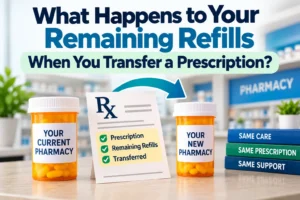
What Happens to Your Remaining Refills?
New York changed its rules for non-controlled prescription transfers effective October 7, 2025.
Under current New York State Education Department guidance, a non-controlled prescription must be transferred in full, including all remaining authorized refills. New York pharmacists are no longer permitted to transfer only one refill at a time under the previous approach.
This subject deserves more explanation, so it will be covered separately in our Pharmacy Education guide on what happens to remaining refills when a prescription is transferred.
What If You Don't Have Any Refills Left?
Having no refills remaining is different from having an existing prescription with authorized refills available to transfer.
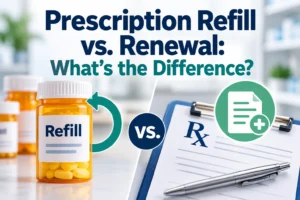
If no refills remain, you may need a prescription renewal or other authorization from your prescriber rather than simply transferring another refill. The appropriate next step depends on the prescription and circumstances.
We'll explore this distinction more fully in our upcoming guide to prescription refills versus renewals.
How Long Does a Prescription Transfer Take?
There is no single transfer time that applies to every prescription.
Timing can depend on factors such as when the request is made, communication between the pharmacies, whether the other pharmacy is open, the status of the prescription and whether additional information or prescriber involvement is needed.
A transfer being completed also does not necessarily mean the medication is immediately ready for pickup. The receiving pharmacy may still need to process the prescription and address other dispensing requirements.
If a transfer seems to be taking longer than expected, asking the receiving pharmacy about its status can help clarify what step is still pending.
We'll address the common reasons for transfer delays in a separate Pharmacy Education article.
Can Every Prescription Be Transferred the Same Way?
No.
Different requirements can apply depending on the prescription. Controlled substances, in particular, are subject to additional state and federal requirements.
New York changed its rules effective April 14, 2026 to permit transfers of controlled-substance prescriptions subject to applicable New York controlled-substance requirements.
Because those requirements are more complex, patients should not assume that every prescription can be transferred using exactly the same process.
We will cover controlled-substance prescription transfers separately rather than oversimplifying those rules here.
What Can You Do Before Requesting a Transfer?
A little preparation can make it easier for the receiving pharmacy to identify the correct prescription.
Before requesting a transfer, consider having your current prescription bottle or label available and confirming the name of the pharmacy currently holding the prescription.
It can also help to request a transfer before you are completely out of medication. Transfers and subsequent prescription processing can take time, and some situations may require additional steps.
If you're unsure whether your prescription can be transferred, ask the receiving pharmacist. They can review the specific situation rather than relying on a general rule.
Transferring a Prescription to Preferred Pharmacy
If you would like to move an eligible prescription to Preferred Pharmacy, our Prescription Transfer service explains how to get started.
Our pharmacy team can review the transfer request and let you know if additional information or steps are needed.
Watch: What Happens When You Transfer a Prescription to Another Pharmacy?
Frequently Asked Questions
Do I need to call my old pharmacy myself?
Often, the receiving pharmacy can contact the pharmacy currently holding your prescription as part of the transfer process. Procedures can vary, so follow the instructions of the pharmacy receiving your transfer.
Do I need to contact my prescriber to transfer a prescription?
Not necessarily. A transfer moves an existing eligible prescription between pharmacies. However, prescriber involvement may be necessary in some situations—for example, when no refills remain or additional authorization is required.
Can I transfer more than one prescription?
Multiple prescriptions may potentially be transferred, provided each prescription is eligible for transfer. The receiving pharmacy can determine what can be transferred based on the individual prescriptions and applicable requirements.
Does a prescription transfer mean my medication is immediately ready for pickup?
No. Transferring the prescription information and preparing the medication for dispensing are not necessarily the same step. After the transfer, the receiving pharmacy may still need to process the prescription and address any applicable dispensing requirements.
Sources
- New York State Education Department, Office of the Professions — Prescription Refills .
- New York State Education Department, Office of the Professions — Transfer of Prescriptions .
- New York State Education Department — Part 63, Pharmacy Regulations .
- New York State Education Department — Transferring Prescriptions for Controlled Substances .
- Walgreens — Transfer Rx .
This article is for general educational and informational purposes only and is not a substitute for personalized medical advice. Talk with your pharmacist or healthcare provider about questions concerning your medications or health conditions.