Keeping track of multiple medications usually starts with having an up-to-date medication list and a consistent system for knowing what to take and when.
Depending on your medication routine, that system might include a written schedule, reminders, a pill organizer, pharmacy-prepared medication packaging, or refill coordination. The important part is that the system reflects your current medication instructions and is updated when a medication, dose, or schedule changes.
Your pharmacist or healthcare provider can help answer questions about your medications and whether a particular organization method is appropriate for your prescriptions.
Key Takeaways
- Keep an up-to-date list of the prescription medications, over-the-counter medicines, vitamins, and supplements you use.
- Record important information such as medication name, strength, and instructions.
- Use a consistent schedule or reminder system if it helps you follow your medication routine.
- Pill organizers and pharmacy-prepared packaging are different ways of organizing medications.
- Refill coordination may help simplify when ongoing prescriptions are due.
- Update your medication list and organization system when your prescriptions change.
- Ask your pharmacist when you are unsure how a medication should be organized, stored, or taken.
FDA recommends keeping a current medication list that includes prescription and nonprescription medicines, vitamins and supplements, along with information such as medication strength and instructions. It also recommends updating the list when a new medication is prescribed, a dosage changes, or a medication is stopped.
Start With an Up-to-Date Medication List
When several medications are part of your routine, it can become difficult to remember every medication name, strength, instruction, and schedule.
A current medication list gives you one place to keep that information.
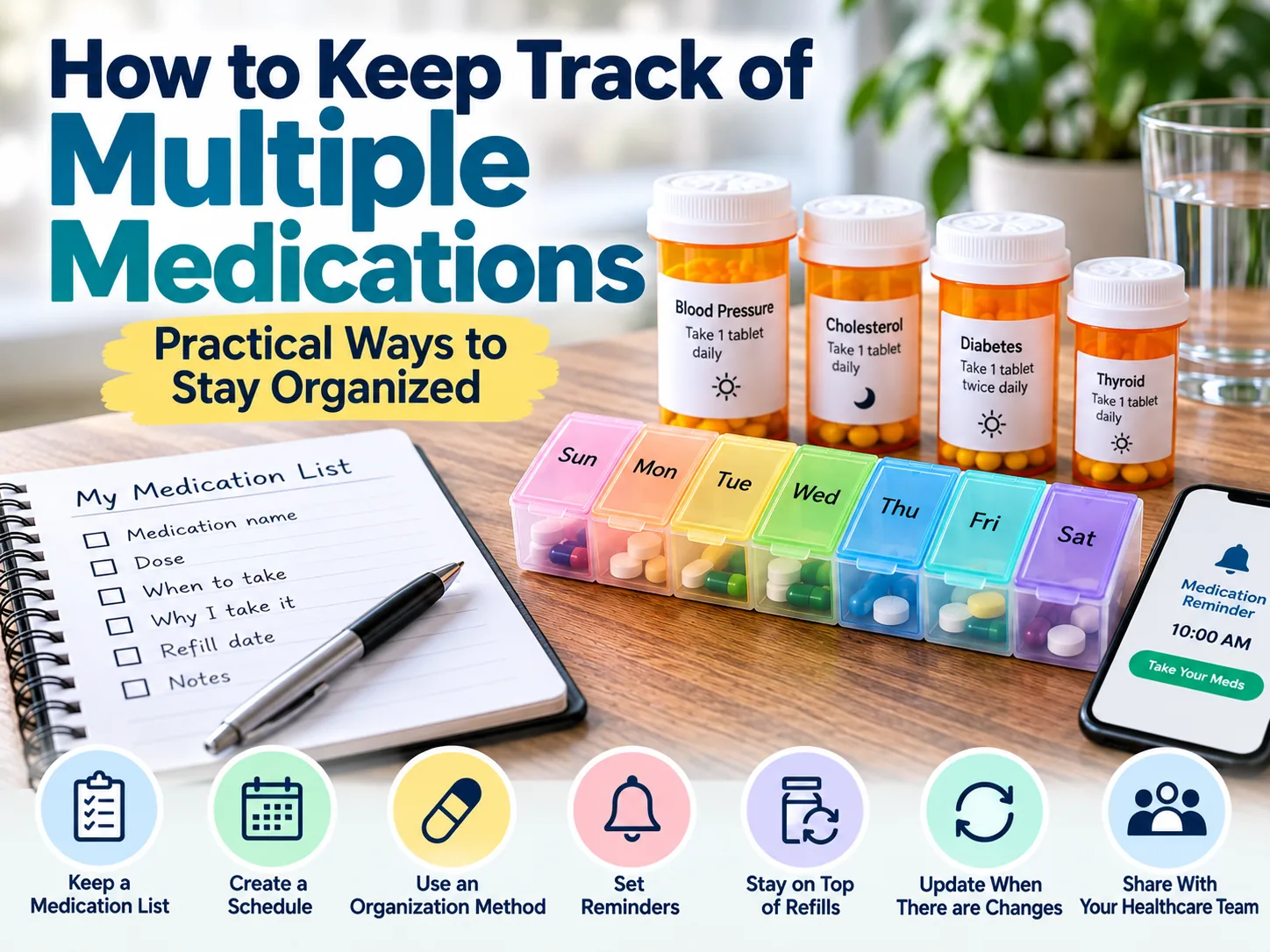
Depending on what you take, your list may include:
- prescription medications
- over-the-counter medicines
- vitamins and dietary supplements
- the strength of each medication
- instructions for when and how it is taken
- why you take the medication, when known
The FDA recommends keeping this information current and having a copy available to share with healthcare professionals. A medication list can be kept on paper, on a smartphone, through an app, or another format that is practical for you.
Create a Medication Schedule You Can Follow
A medication list tells you what medications you use. A medication schedule can help you keep track of when and how you have been instructed to take them.
For example, a schedule might organize medications according to morning, afternoon, evening, or bedtime instructions.
Johns Hopkins recommends writing down a medication routine, keeping it somewhere visible, and updating the schedule when medications change. NIA also identifies charts, calendars, weekly pill boxes, timers, and written reminders as possible ways to help people keep track of medication timing.
The system itself can be simple. What matters is that it accurately reflects the instructions provided for your medications.
Choose a Medication Organization Method
Different people may prefer different ways of organizing their medication routine.
Two common approaches are reusable pill organizers and pharmacy-prepared medication packaging.
Pill Organizers
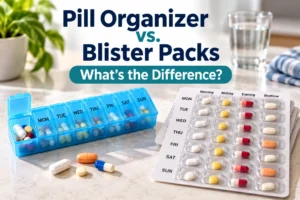
A pill organizer is a reusable container with compartments that may separate medications by day, time of day, or both.
The organizer is commonly filled by the person taking the medications or by a caregiver.
Pharmacy-Prepared Medication Packaging
With pharmacy-prepared packaging, eligible medications can be organized into labeled compartments according to the prescribed medication schedule before the packaging is provided to the patient.
Not every medication is necessarily appropriate for this type of packaging.
If you're considering these two approaches, see Pill Organizer vs. Blister Packs: What's the Difference?
Use Reminders When They Help
Organization does not necessarily require a complicated system.
For some people, reminders may be useful alongside a medication schedule. Examples can include:
- a phone alarm
- a calendar
- a written reminder
- a medication reminder app
- connecting a medication time with an established daily routine, when consistent with the medication instructions
NIA and Johns Hopkins both identify reminders, timers, calendars, and routine-based approaches as practical tools that may help people keep track of medication schedules.
Reminders should support the medication instructions you have been given rather than replace them.
Keep Track of Prescription Refills
Medication organization also includes knowing when ongoing prescriptions need to be refilled.
When several prescriptions are due on different dates, keeping track of those refill dates can add another layer to the medication routine.
One pharmacy service that may help some patients is medication synchronization, sometimes called Med Sync. Medication synchronization coordinates eligible ongoing prescriptions so they can be scheduled for refill around the same date.
You can learn more in What Is Medication Synchronization and How Does It Work?
Medication synchronization and medication packaging are different services: synchronization focuses on refill timing, while packaging focuses on organizing medications according to the prescribed schedule.
Update Your System When a Medication Changes
Medication organization systems need to reflect your current prescriptions.
For example, your system may need to be updated if:
- a new medication is started
- a medication is discontinued
- a dose changes
- medication instructions change
FDA specifically recommends reviewing and updating a medication list when there is a new prescription, a different dosage, or a medication has been stopped.
If you use a pill organizer, pharmacy-prepared packaging, or another medication-management system and a prescription changes, contact your pharmacist or appropriate healthcare professional if you are unsure how that change should be handled.
Do not assume that an existing medication setup still reflects your current instructions after a prescription change.
Share Your Medication List With Your Healthcare Team
A medication list is useful not only for your own organization.
It can also help healthcare professionals understand what you are currently taking.
The FDA recommends keeping a copy available to share with doctors and pharmacists and sharing the list with a trusted relative, friend, or caregiver when appropriate. NIA likewise recommends showing an up-to-date medication list to healthcare providers.
This can be especially useful when you receive care from more than one healthcare professional.
Questions to Ask Your Pharmacist
If you're trying to make a medication routine easier to manage, useful questions may include:
- Is my medication list up to date?
- Are there special instructions I should include on my medication schedule?
- Can these medications be placed in a pill organizer?
- Which of my medications may be appropriate for pharmacy-prepared packaging?
- Are any medications supposed to remain in their original packaging?
- What should I do with my medication organization system if my prescription changes?
- Could medication synchronization help coordinate my ongoing prescription refills?
Your pharmacist can help clarify medication instructions and answer questions about the organization methods available for your prescriptions.
Medication Packaging at Preferred Pharmacy
Preferred Pharmacy offers medication packaging for eligible prescriptions to help patients organize medications according to their prescribed schedules.
Packaging options may be useful for people managing multiple ongoing medications or for caregivers helping organize another person's medication routine.
Learn more about Medication Packaging at Preferred Pharmacy .
Watch: How to Keep Track of Multiple Medications
Watch this Preferred Pharmacy Education Series video for a concise overview of practical ways to keep track of multiple medications.
Frequently Asked Questions
What is the easiest way to keep track of multiple medications?
There is no single organization method that is best for everyone. A useful starting point is an up-to-date medication list combined with a consistent system for following your medication schedule. Depending on your routine, that may include written schedules, reminders, a pill organizer, pharmacy-prepared packaging, or refill coordination.
What information should I put on a medication list?
A medication list can include prescription medications, over-the-counter medicines, vitamins and supplements, along with information such as medication name, strength, instructions, and why you take it. Keep the list updated when your medications change.
Can a pill organizer help me keep track of medications?
A pill organizer can provide compartments for organizing medications by day or time of day. However, not every medication is necessarily appropriate to remove from its original packaging or place into an organizer. Ask your pharmacist if you are unsure about a particular medication.
What should I do when one of my prescriptions changes?
Update your medication list and any schedule or organization system that contains the old information. If you use pharmacy-prepared packaging or are uncertain how the change affects your medication setup, contact your pharmacist or healthcare provider for guidance.
Sources
This article is for general educational and informational purposes only and is not a substitute for personalized medical advice. Talk with your pharmacist or healthcare provider about questions concerning your medications or health conditions.